Moving from California to Charlotte: What Actually Changes
California-to-Charlotte: tax differences, climate adjustment, popular CA-transplant neighborhoods, what to ship vs sell, real cross-country logistics.
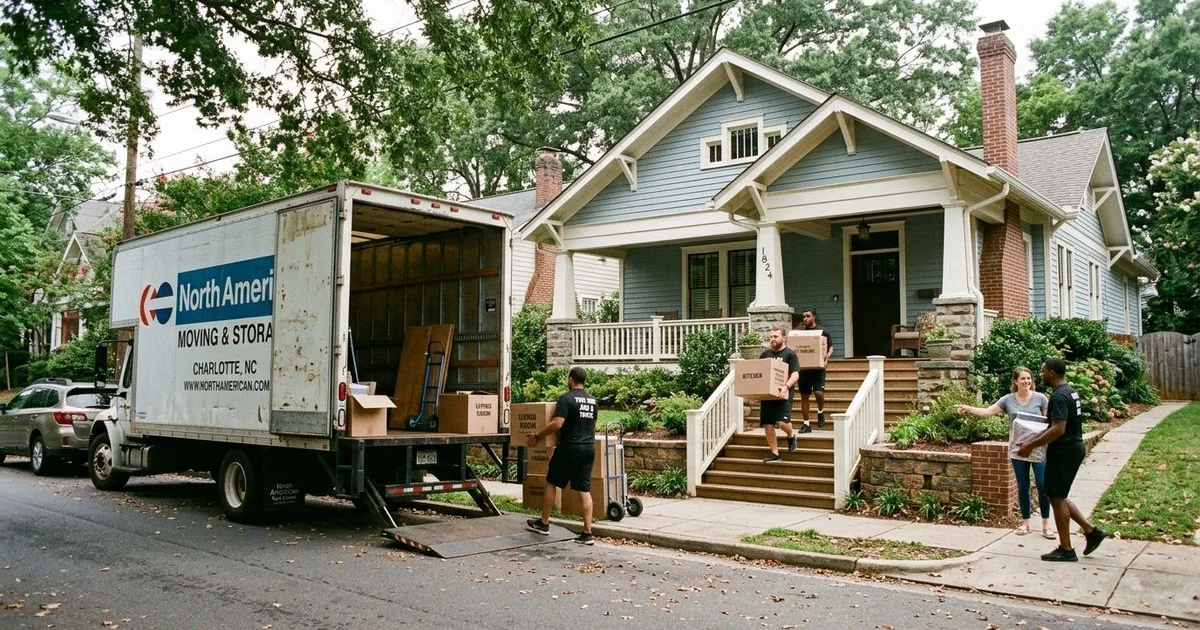
We have watched moving to Charlotte from California shift from a quiet trend into a major relocation pipeline.
Over 22,000 Californians now move to the Charlotte and Raleigh corridors every single year.
Our team speaks with homeowners and business owners weekly who want to escape high costs without losing the energy of a real city. You probably already know the main drivers, like housing affordability and massive tax savings.
We want to walk you through the actual friction points and daily realities of this specific cross-country pivot. Let us break down the real numbers for 2026 and outline the exact steps to make your transition successful.
Why CA → NC has become a real pattern
Our clients often cite the rise of remote work as the tipping point for their CA to NC relocation.
Maintaining a West Coast salary while living in a Southeastern market creates a massive financial advantage.
We track the primary catalysts driving this specific relocation route closely. The three major factors include:
- Corporate presence: Charlotte serves as the second-largest banking center in the United States, with 19 Fortune 500 companies anchoring the local economy.
- Tax relief: North Carolina offers a flat income tax rate, dropping below 4% in 2026.
- Business growth: The region provides extensive opportunities for entrepreneurs and corporate transfers alike.
We see executives using this arbitrage strategy to build significant wealth.
Our data shows that U-Haul ranked California as the top state for out-migration recently.
North Carolina consistently lands in the top three destination states for these departing residents.

The cost-of-living swing
Our analysis of the 2026 housing market reveals a striking contrast in property values. San Francisco single-family homes reached a median sale price of $1.53 million in early 2026.
We compare that directly to the Charlotte median, which currently sits around $404,000. This massive price gap allows buyers to double or triple their square footage instantly.
We track these financial differences closely to help you plan. Review this quick breakdown of average expenses:
| Expense Category | California (Typical Metro) | Charlotte, NC |
|---|---|---|
| Median Home Price | $1.35M (Los Angeles) | $404,000 |
| Top Income Tax Rate | 13.3% | 3.99% |
| Average 1-Bed Rent | $2,800+ | $1,470 |
Our clients often upgrade to luxury neighborhoods like SouthPark or Myers Park for less than the cost of a starter home in California. For specific numbers and your salary equivalence, see our Charlotte cost-of-living comparison.
Our experience shows that state income tax changes create the second biggest financial swing. A high earner making $200,000 saves roughly $15,000 to $18,000 annually just by switching to North Carolina.
We always advise newcomers to budget for slightly higher auto insurance and summer cooling bills. These minor increases barely dent the massive savings generated by cheaper housing and lower taxes.
Climate adjustment: what to expect
We constantly field questions about the Southern climate from nervous West Coast buyers. Charlotte features four distinct seasons, but summer requires the biggest physical adjustment.
Our relocation team warns that June through August will bring temperatures between 88 and 92 degrees Fahrenheit. August ranks as the most humid month, with average relative humidity hitting a sticky 74 percent.
We recommend scheduling indoor activities during the late afternoon when thunderstorms frequently roll through the area. The first July and August will feel incredibly heavy if you are accustomed to dry coastal breezes.
Handling the Heat and Humidity
Our Northern California clients usually adapt faster than those arriving from coastal Southern California. You will fully acclimate by your second summer in the city.
We suggest a few practical steps for managing the new climate. These tips make a big difference:
- HVAC maintenance: Schedule professional air conditioning service every spring.
- Outdoor timing: Plan yard work and exercise for early mornings before the sun peaks.
- Wardrobe updates: Invest in moisture-wicking fabrics and breathable materials.
We believe the dogwoods and maples turning color easily make up for the sweaty summer months. Fall eventually arrives in September, bringing stunning foliage and crisp air.
Our team loves the mild winter season, with high temperatures usually hovering in the upper 40s. True spring headlines the year with citywide azalea blooms and gorgeous sunny days.
Neighborhoods popular with CA transplants
Our local guides have identified four distinct corridors that attract the most West Coast buyers. Finding the right cultural fit is just as important as finding the right floor plan.
We match incoming residents with neighborhoods that mirror the energy of their previous hometowns. Each area offers a unique flavor and housing style.
Our breakdown of the top target areas looks like this. Review these popular choices:
- South End: This dense, transit-rich corridor features the LYNX Blue Line and highly walkable Rail Trail. Most Bay Area transplants seeking an urban vibe land here first.
- NoDa: This arts and music district mixes 1920s mill housing with modern infill projects. The local energy closely maps to Oakland or the Outer Mission.
- Plaza Midwood: This eclectic area centers around local institutions like the Common Market. You will find strong Echo Park or East Bay vibes among the mid-century homes here.
- Davidson: This historic college town sits 25 minutes north of the city center. It draws buyers who want walkable small-town life with a Berkeley feel, minus the extreme price tag.

We frequently assist families who prioritize top-tier school districts above all else. The Fort Mill and Tega Cay borders in South Carolina receive constant inquiries.
Our home buyer services practice covers all of these zones, including the popular Lake Norman waterfront towns of Huntersville and Cornelius. You can expect to pay around $310 per square foot in premium areas, while emerging neighborhoods average closer to $210.
What to ship versus sell
We urge clients to aggressively declutter before getting a binding moving quote. Cross-country freight rates in 2026 run between $0.50 and $0.80 per pound for full-service moves.
Calculating the Freight Costs
Our math shows that a typical 7,000-pound, three-bedroom house costs roughly $4,500 to $5,450 to relocate from the West Coast. Shipping lower-end pressboard furniture simply does not make financial sense at these rates.
We advise keeping any high-quality custom pieces, large rugs, and items with deep sentimental value. Keep in mind that heavy California-specific gear, like specialized surfboards, might collect dust in a landlocked city.
Our local trails are great, but your technical mountain bikes might see less intense use here. Plan to scale down your outdoor recreation footprint slightly to match the local topography.
We use this simple framework to help clients decide. Compare your options below:
| Item Category | Recommendation | Rationale |
|---|---|---|
| Solid Wood Furniture | Ship | Replacement cost far exceeds the $0.80 per pound shipping rate. |
| IKEA or Pressboard | Sell | Disassembly and transit often destroy these fragile pieces. |
| Winter Clothing | Ship | Charlotte experiences actual winter weather with occasional ice events. |
| Surf & Beach Gear | Sell or Store | The nearest major ocean beaches sit over three hours away. |
One-time tax planning to do before you move
Our financial partners stress the importance of careful planning before changing your legal domicile. California does not impose a literal exit tax, but the Franchise Tax Board aggressively pursues former residents. We constantly see the state audit high earners using a subjective closest connections test. If you leave mid-year, you must file a partial-year state return in both locations.
We strongly recommend timing your corporate bonuses, RSU vesting, or ISO exercises with extreme caution. The state can legally claim source-income tax on these assets even after you unpack your boxes in North Carolina.
Our most successful clients hire a relocation-savvy CPA during their final months on the West Coast. Professional guidance prevents expensive surprises during your next tax season.
Handling Existing Real Estate
We want to highlight a common trap regarding retained properties. Any rental house you keep out west continues to generate taxable source income for that state.
Our real estate contacts confirm that selling a property there may trigger capital gains taxed at ordinary income rates. You must clearly sever your ties, update your voter registration, and switch your driver’s license immediately upon arrival.
What we recommend for the search
We encourage almost all relocating buyers to sign a short-term lease before purchasing a house. A year in a local apartment allows you to learn the traffic patterns and confirm which neighborhood truly fits your lifestyle.
Our research shows the average one-bedroom apartment in Charlotte currently rents for about $1,470 per month. This affordable baseline gives you breathing room to explore without rushing into a massive financial commitment.
We recommend setting up your initial search strategy like this. Follow these steps:
- Rent first: Secure a 6 to 12-month lease in your target area.
- Test the commute: Drive your expected daily route during actual rush hour.
- Explore on weekends: Spend time in different zip codes to gauge suburban versus urban appeal.
Our team can run apartment locating and home-buying services simultaneously if your corporate transfer demands a faster timeline. The best conversations start by defining exactly how you want to live, rather than just chasing available listings.
Conclusion
We know that moving to Charlotte from California requires significant planning and a willingness to adapt.
The financial rewards and lifestyle upgrades make the effort completely worthwhile for most families.
Our team stands ready to help you map out your exact timeline and budget.
Reach out to us today to start discussing your ideal neighborhood and housing strategy.
Common questions
How much will my California salary buy in Charlotte?
Should I ship my Bay Area furniture or sell it?
Will I miss California weather?
Related guides
Best Time of Year to Move to Charlotte
Charlotte's seasonal weather, school calendars, and rental peaks. When to time your move for the best inventory and weather.
Charlotte Climate, Weather, and Seasonal Lifestyle
Charlotte's year-round climate, humidity, seasonal events, and outdoor rhythm. What to expect after a Northern move.
Charlotte Commute Guide: I-77, I-485, and the LYNX Blue Line
Real Charlotte commute reality on I-77, I-485, the toll lanes, and the LYNX Blue Line. Where to live based on commute, not zip code.
Charlotte vs. Raleigh: Which North Carolina City Fits You?
Charlotte vs Raleigh for relocators: industry mix, cost, climate, commute, lifestyle fit. Honest head-to-head comparison.
Ready to make Charlotte feel like home?
Free relocation match, typically same-week reply.