New Construction or Resale in Charlotte? Real Trade-Offs
Builder incentives, warranty trade-offs, lot sizes, and HOA reality. When new construction beats resale in Charlotte.
What this comparison really is
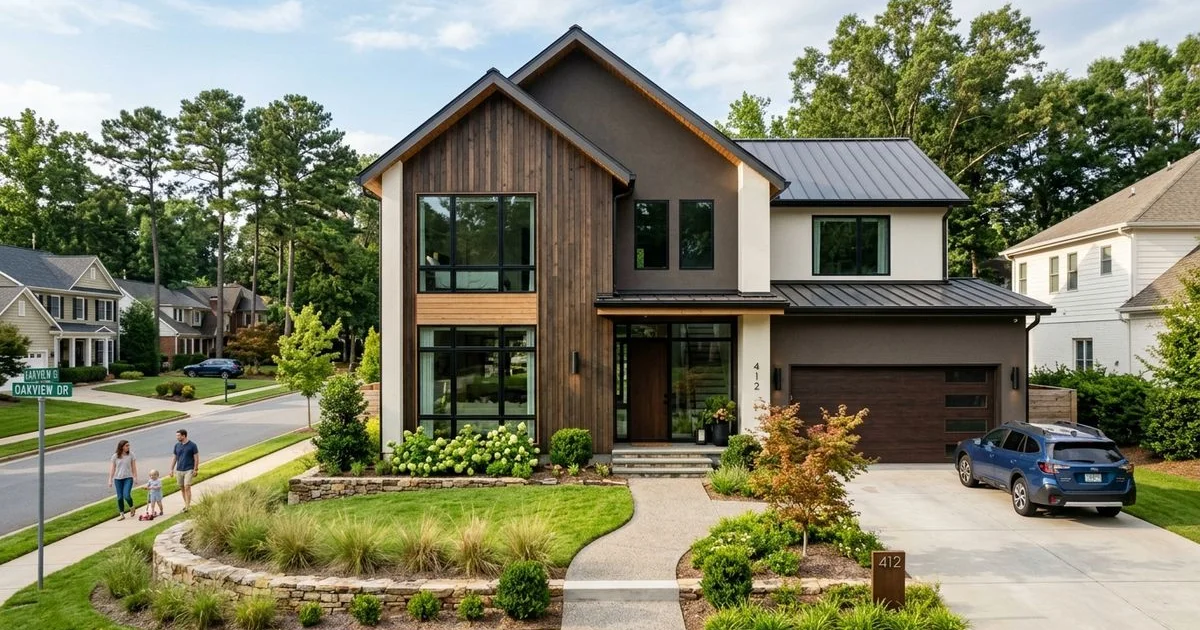
When weighing new construction vs resale charlotte properties, the decision is rarely about just picking an older or newer house. It comes down to builder incentive structures, warranty coverage, lot size patterns, and the neighborhood maturity.
We hear this question every day from local buyers trying to maximize their budgets in 2026.
The 6.54% average mortgage rate changes the math entirely for anyone shopping in the Queen City.
A rate buy-down from a builder might save you hundreds of dollars a month, while a classic home offers large trees and distinct architectural character. Our approach centers on looking past the surface price to evaluate the total cost of ownership.
For broader buyer process context, check out our Home Buyer Services page for a complete roadmap. Let us explore the data, what the numbers actually reveal, and how to position yourself for the best deal.
Pricing trend differences
Charlotte new construction tends to follow a different pricing pattern than resale homes. New-build prices often look high on the front-end sticker but include builder incentives that change the final math.
We consistently track these market fluctuations across Mecklenburg County. The median home price in Charlotte reached approximately $412,500 in 2026. A new construction home median sits closer to $455,000, while resale homes average around $400,000.
Buyers must account for incentives like rate buy-downs, closing-cost credits, and design-center allowances. Resale Charlotte prices are set against the local comparable-sales market, so you see exactly what you pay.
| Property Type | Base Price | Incentive Value | Net Effective Cost |
|---|---|---|---|
| New Construction | $500,000 | 1% rate buy-down + $10,000 credit | ~$485,000 to $490,000 over 5-7 years |
| Resale Home | $500,000 | No builder incentives | $500,000 |
Our clients often appreciate the transparency of resale pricing, though negotiation room varies. The incentives only matter if they offset something you would otherwise pay out of pocket.
Builder rate buy-downs in 2026 often save real money. In a low-rate environment, the math is much tighter.
Builder-incentive framing
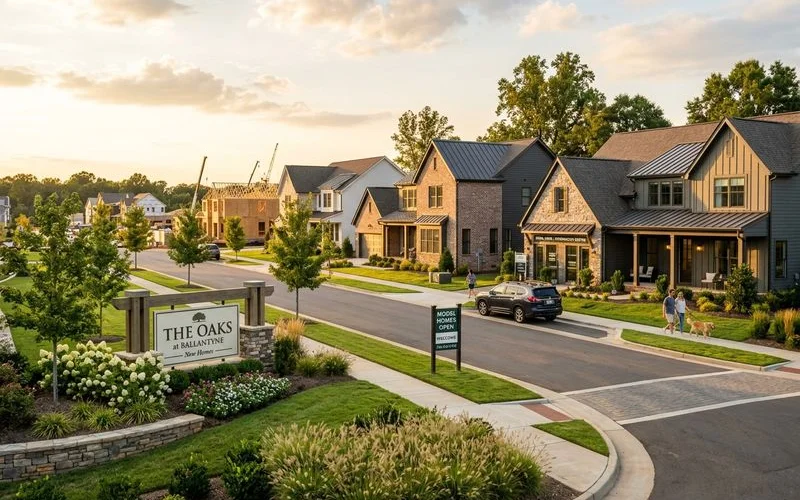
Charlotte builders typically offer substantial incentives to keep their inventory moving. These offers change the affordability equation for many buyers.
We see regional players like M/I Homes and Empire Communities actively buying down interest rates. A builder might offer a fixed rate in the high 4% or low 5% range for qualified buyers. This represents a massive savings compared to the standard 6.54% market rate.
Buyers should expect the following typical offers:
- Rate buy-downs: A 1% to 2% reduction off the market rate, funded by the builder’s preferred lender.
- Closing-cost credits: Direct cash benefits ranging from $5,000 to $15,000 toward closing costs.
- Design-center allowances: Allowances of $5,000 to $25,000 toward upgrades, kitchen finishes, or flooring.
- Free upgrades: Specific included items like granite countertops or hardwood floors at no additional charge.
Our team always warns buyers about the primary catch. Most builder incentives require using the builder’s preferred lender.
You must compare the total cost against an external lender. Sometimes the math heavily favors the builder lender, and sometimes it does not.
Warranty vs. inspection-revealed trade-off
New construction comes with a builder warranty, while resale homes rely on the inspection process to reveal condition issues. You negotiate repairs or credits before closing on a resale home, but once you close, you own the issues.
We advise buyers to carefully read the fine print on any warranty document. North Carolina law holds builders to specific standards, but the practical limits are very real. The average homeowner spends over $6,000 per year on maintenance and unexpected repairs, making warranties highly appealing.
A standard Charlotte new construction warranty typically breaks down into three tiers:
- 1-Year Workmanship: Covers everyday issues like cabinet alignment, flooring gaps, and minor electrical problems.
- 2-Year Systems: Protects the original installation of HVAC, plumbing, and electrical systems.
- 10-Year Structural: Covers major load-bearing defects. The North Carolina Statute of Repose provides a six-year window for major structural defects, and builders often back this with a 2-10 Home Buyers Warranty.
Our experience shows that neither approach is clearly better. New construction can have installation quality issues that the warranty does not cover easily.
Resale homes feature known wear that a professional inspection surfaces clearly. Buyers should order an 11-month warranty inspection on new builds to catch hidden problems before the workmanship coverage expires.
Neighborhood-character maturity
The single biggest qualitative difference between new construction and resale is neighborhood character. The visual identity and infrastructure of a community dictate the daily living experience.
We notice buyers frequently torn between modern amenities and historic charm. New construction communities in areas like Huntersville, Indian Land, Concord, and Mooresville offer incredible conveniences.
These newer developments come with distinct advantages:
- Modern floor plans that are often larger than equivalent resale homes.
- Newer infrastructure including roads, utilities, and sidewalks.
- Planned amenities like community pools, clubhouses, and walking trails.
- A younger resident demographic representing the original buyer cohort.
Our local market analysis reveals a few trade-offs for these new areas. You will find smaller planted trees rather than 50-year-old oaks. These areas have less established identities and experience ongoing construction noise during the early years.
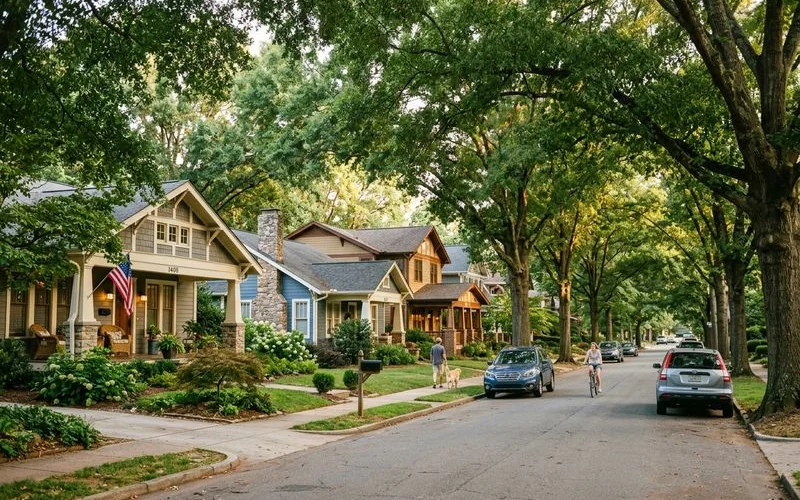
Resale neighborhoods like Myers Park, Dilworth, Plaza Midwood, established Lake Norman, and mature Ballantyne offer a completely different feel. They feature mature trees, diverse housing stock from different eras, and highly established neighborhood identities. If you prefer lake norman new builds, you might sacrifice some of this mature character for modern community amenities.
Many older communities provide better walkability if the neighborhood sits near a built-up commercial corridor. The trade-offs include older systems requiring maintenance, outdated floor plans, and the frequent need for a renovation budget.
Lot-size patterns
Charlotte new construction trends heavily toward smaller lots than equivalent-priced resale homes. Builder economics favor squeezing more units per acre to offset rising land costs, especially in higher-density planned communities.
We track local development data closely. Recent national and regional trends show that nearly 65% of new lots are under one-fifth of an acre.
Typical lot sizes break down distinctly across the Charlotte metro area:
| Market Segment | Common Lot Size Range |
|---|---|
| New Construction Metro | 0.10 to 0.25 acres |
| New Construction Luxury | 0.33 to 0.50 acres |
| Resale Established | 0.20 to 0.50 acres |
| Resale Older Luxury | 0.50 to 1.0+ acres |
Our buyers who value outdoor space must factor this reality into their search. A new-construction floor plan may feel massive and pristine inside.
You might be giving up a significant backyard or privacy buffer. Resale properties consistently deliver more breathing room between neighbors.
HOA-fee reality
Mandatory Homeowners Associations are standard in new developments, adding a fixed monthly cost that many older resale neighborhoods avoid. These organizations maintain common areas and enforce neighborhood rules.
We always advise factoring these fees into your long-term monthly budget. The average North Carolina resident pays around $385 monthly in HOA dues, but Charlotte features a wide variety of fee structures. Over a 10-year hold, a $200 monthly HOA equals $24,000.
Typical fee tiers in the Charlotte area include:
- Standard subdivision HOA: Fees range from $20 to $80 per month. This covers neighborhood maintenance, signage, and basic landscaping.
- Amenity-rich community: Fees range from $80 to $200 per month, plus possible club fees. This level includes access to a pool, clubhouse, fitness center, and sometimes private streets.
- Luxury planned community: Fees range from $150 to $400 per month, plus club fees. This includes premium amenities and sometimes mandatory club membership.
Our team points out that resale homes in established neighborhoods often lack mandatory HOAs. Some areas feature voluntary civic associations costing only $10 to $50 per year.
You must build the HOA into your budget honestly. Assess whether the amenities provided justify the recurring monthly expense.
What we tell buyers comparing
The best choice hinges on whether you value financial incentives and modern systems over established character and larger lots. There is no universally superior choice between a brand-new build and a historic property.
We help clients weigh these specific lifestyle factors against their budgets. The best transaction value in 2026 often lies in new construction due to aggressive builder rate buy-downs. Long-term lifestyle fit and authentic neighborhood feel frequently point toward resale in established Charlotte markets.
Your decision usually comes down to these distinct buyer profiles:
- Choose new construction if: You prefer modern systems, planned amenities, newer floor plans, and are willing to wait for landscape maturity.
- Choose resale if: You value an established neighborhood character, mature landscapes, a walkable commercial corridor, and feel comfortable managing a renovation budget.
Our recommendation is to tour examples of both property types before making a final call. For the Charlotte-area markets where new construction dominates, including Huntersville, Concord, Indian Land, and parts of Lake Norman, see our Huntersville and Lake Norman guide and Ballantyne guide for specific corridor context.
Take action today by scheduling a discovery call with a local real estate professional to review your options for new construction vs resale charlotte.
Common questions
Are builder incentives worth taking in Charlotte?
Should I get a new-construction home inspected?
Are HOA fees higher in new-build communities?
Related guides
Buyer Agent vs. Dual Agency in North Carolina
How NC's agency disclosure works and why exclusive buyer representation usually serves the buyer better.
Buying a Home in Charlotte During a Corporate Relocation
How RMC involvement, employer-paid closing costs, and start-date sequencing change the Charlotte buying workflow.
Buying a Home Sight-Unseen in Charlotte
Virtual-tour standards, contingency clauses, and on-the-ground buyer-agent verification for sight-unseen Charlotte purchases.
Closing Costs in North Carolina: What to Expect
Real NC closing cost ranges (2-5%), excise tax, attorney-state process, and what sellers contribute.
Ready to explore Home Buyer Services?
A short conversation gets you a curated, lifestyle-first match.